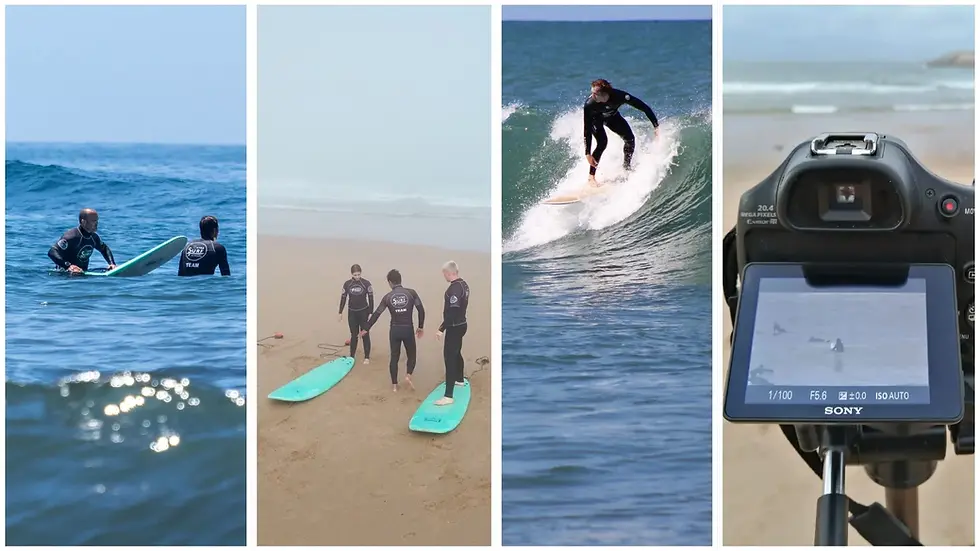
Ericeira Beach Breaks vs Reef Breaks: Which Is Better for Learning and Improving Your Surfing


One of the most common questions we hear from beginner and intermediate surfers is:
"Are beach breaks or reef breaks better for learning?"
The answer isn't as simple as choosing one over the other.
Not all surf spots are the same, and understanding the difference between beach breaks and reef breaks can help you become a smarter and safer surfer.
Ericeira is known for its reef breaks, with most surf spots featuring rocky bottoms rather than sandy beaches.
Surfing in Ericeira: Beach Breaks vs Reef Breaks
This is a topic every surfer should understand before entering the water. Knowing how different surf breaks work can help you choose the right waves and progress faster.
Beach Breaks (Sand Bottom)
Beach breaks are surf spots where waves break over sandbanks.
Many beginners assume that a sandy bottom automatically means an easier wave. In reality, that's not always true.
Faster and More Powerful Waves
Beach break waves are often faster, steeper, and more hollow.
For beginner surfers, this can be challenging because you usually need a quicker pop-up to catch the green face of the wave before it closes out.
Unless you're surfing in the whitewater, beach breaks can sometimes feel less forgiving than expected.

The Close-Out Problem
One of the biggest challenges of beach breaks is the close-out.
A close-out happens when the entire wave breaks at the same time instead of peeling gradually from one side to the other.
This makes it harder to find a clean section to surf and often limits the length of your ride.

"It's Just Sand"... Right?
Yes, the bottom is sand. But that doesn't mean every wipeout is soft.
Many beach breaks have shallow sandbars that can be surprisingly hard during a fall, especially at low tide.
Respect the ocean regardless of what's beneath you.

Reef Breaks (Rock Bottom)
Reef breaks are surf spots where waves break over rock, reef, or coral formations.
While they often look more intimidating, many soft reef breaks can actually provide excellent learning conditions.
More Predictable Waves
Because the bottom remains in the same place, reef breaks tend to produce more consistent and predictable waves.
Many soft reef breaks offer slower wave faces, giving surfers more time to stand up and find their balance.
(Of course, this doesn't apply to heavy world-class reef breaks, which are designed for advanced surfers.)

Better Wave Shape
A major advantage of many reef breaks is wave quality.
Unlike beach breaks that frequently close out, reef breaks often break in clearly defined sections.
This allows surfers to enjoy longer rides and gives beginners more opportunities to practice trimming and turning on the green face of the wave.

Channels: A Game Changer
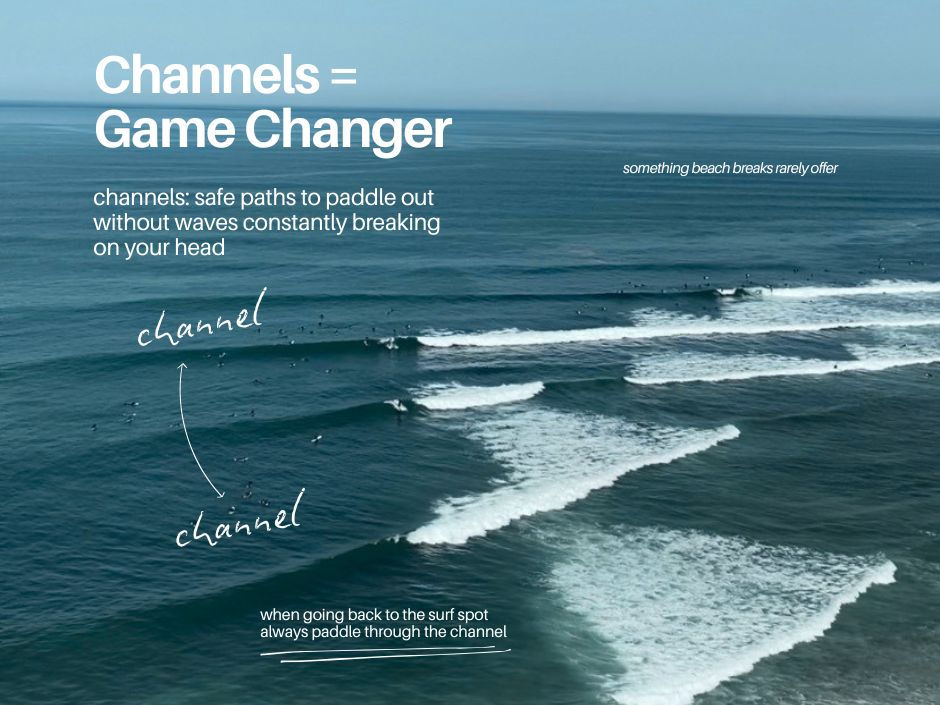
One of the biggest benefits of many reef breaks is the presence of channels.
Channels are deeper sections of water where waves usually don't break.
They allow surfers to paddle out more easily without constantly battling incoming waves.
Whenever possible, use the channel when paddling back to the lineup. It saves energy and makes your surf session much more enjoyable.
So, What's Better for Learning?
Both.
The best wave depends on your surfing level, the conditions, and what you're trying to improve.
Beach breaks can help surfers develop quick reactions, stronger paddling, and better wave-reading skills.
Reef breaks often provide cleaner wave faces, longer rides, and more predictable conditions for practicing technique.
At Extra Surf School, we choose the surf spot according to the conditions of the day and the goals of each surfer, because the best classroom is always the right wave at the right time.
Final Thoughts
There is no perfect surf break.
The more different types of waves you experience, the faster you'll progress as a surfer.
Understanding how beach breaks and reef breaks work will help you make better decisions in the water, improve your confidence, and enjoy every surf session even more.
Whether you prefer beach breaks or reef breaks, understanding Ericeira Beach Breaks vs Reef Breaks will help you become a more confident surfer.
If you can handle the variety of waves Ericeira has to offer, you'll feel comfortable in almost any lineup around the world.
Want to experience the best surf conditions in Ericeira?
Book your surf lessons with Extra Surf School and learn in the right waves for your level.
See you in the lineup! 🌊🏄♂️